Social media can get thousands of people doing the same thing before anyone stops to ask what it actually accomplishes. A mysterious status goes up, friends start asking questions, and suddenly everyone wants in. That might make a successful trend, but does it make a successful awareness campaign?
The Chapter 4 Breast Cancer Meme case study made me think about that difference. Women were encouraged to post their bra color or share suggestive statements about where they kept their purses. The idea was to support breast cancer awareness while keeping men confused about what the posts meant.
I can see why people participated. It was easy, playful, and connected to a cause people cared about. But if the cause stays a secret, how much awareness are we really creating?
Why Everyone Wanted In
These memes had several ingredients that help content spread: curiosity, personalization, and participation. People could add their own answers, share with friends, and feel included in something bigger without spending money or leaving home.
The mystery helped, too. An unexpected status makes people stop scrolling. Once friends start commenting, the conversation gives others a reason to join. Being part of an inside joke can feel more appealing than sharing another informational post.
There was also an emotional reward. Participants could feel they were supporting people affected by breast cancer. That matters because people often share content that reflects their values and how they want others to see them.
From a marketing perspective, the campaign understood how to attract attention. It gave users something simple to do and a reason to pass it along. The problem was what happened after that.
Attention Needs Somewhere to Go
My biggest issue with the campaign is that the action people were asked to take had very little connection to the actual cause. Posting a color did not explain breast cancer, connect someone with support, or give readers a clear next step.
Someone could see the post, laugh at the comments, and keep scrolling without ever knowing breast cancer was involved.
That is where engagement and meaningful results become different things. Comments and shares show that people interacted with content. They do not automatically show that anyone learned something, donated, or volunteered. A campaign needs goals beyond getting people talking.
The secrecy also limited who could participate. Keeping men out of the conversation overlooked potential supporters and people affected by the disease. The American Cancer Society explains that men can develop breast cancer, too. An awareness campaign should make useful information easier to access.
Keep the Creativity. Add a Purpose.
I would keep the campaign’s personal, shareable format but give every post a clear connection to breast cancer and an action people could take.
Participants could share why the cause matters to them, with permission if discussing someone else’s experience. Then they could include a link to reliable information, a fundraiser, or a volunteer opportunity.
For example, Making Strides Against Breast Cancer connects participation with fundraising and community events. That gives someone who feels motivated a place to direct that energy.
Not everyone has money to donate, so offering different ways to help matters. Sharing a useful resource or exploring volunteer opportunities can make participation more accessible.
Marketers could then evaluate results that match the campaign’s purpose: resource clicks, volunteer registrations, and donations, alongside reach and engagement.
Make the Mission Feel Real
Personal stories can help people understand why a cause deserves their attention. A willing survivor sharing their experience or a volunteer explaining why they participate can make the mission feel concrete.
For a brand, that connection should carry through its actions. If a business says it supports breast cancer awareness, it should explain what it contributes and how people can participate. Pink graphics alone leave too many questions unanswered.
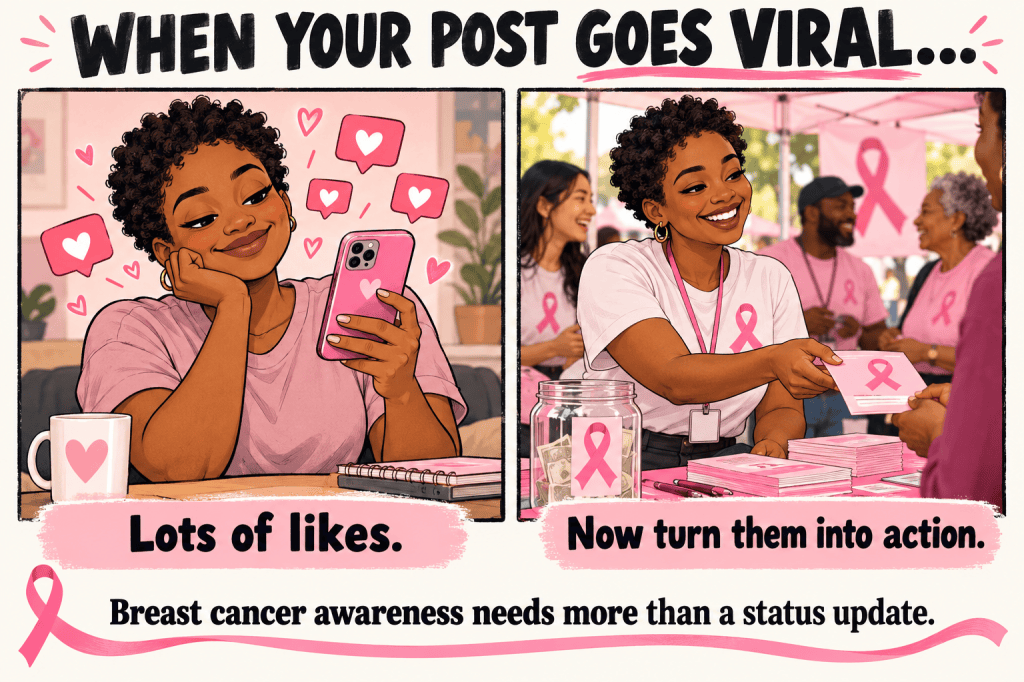
The meme I created for this post captures my takeaway: “Lots of likes. Now turn them into action.”
Social media can open the door to involvement, but a campaign needs to show people where to go next.
When you share a post supporting a cause, what makes you take the next step?
Liked this? Leave a comment below — I’d love to hear what you think.


Leave a Reply